

Hand caning, six-way
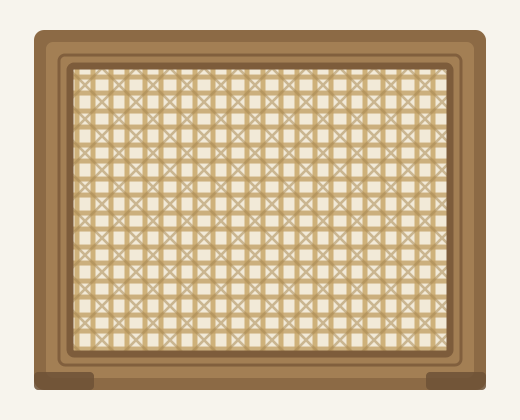
Strand cane threaded through drilled holes in the frame, seven passes, closed with a beading strip. The traditional repair for Thonet, bentwood and older dining chairs.
- Bench time
- 14–20 hours
- From
- 2 450 DKK
Aarhus C · Jægergårdsgade · At the bench since 2014
We re-weave seats by hand — six-way cane, Danish papercord, rush and seagrass — and repair the frame underneath while it is on the bench. Most chairs go home within three weeks.
Book a seat inSee what it costs
Four seat types cover almost everything that comes through the door. If yours is none of them, bring it anyway — odd weaves are the interesting part of the week.
Strand cane threaded through drilled holes in the frame, seven passes, closed with a beading strip. The traditional repair for Thonet, bentwood and older dining chairs.

Unlaced twisted paper cord over a wooden frame, envelope or plaited pattern. What sits on most Danish dining chairs from the fifties onwards, and what wears out first.

Twisted natural rush or seagrass laid in a four-cornered spiral, packed with kraft as it goes. Softer underfoot, and the right answer for country and ladder-back chairs.

Machine-woven sheet cane pressed into a routed groove and locked with a spline. Correct for chairs built for it — we will say so if yours was not, rather than route a groove that should not exist.
Five steps, no surprises in the middle. You approve the quote before anything is cut off the chair.
Bring the chair in, or send four photographs — seat, underside, one corner, the whole chair. We tell you the weave, the material and the price the same day.
Old weave out, holes cleared, joints tested. Loose joints and split rails are found here, and quoted separately before we carry on.
Hide glue and cramps for loose joints, a let-in patch where a rail has split. The chair sits for a day while the glue cures.
Cane soaked, cord measured, worked in one run so the tension stays even across the seat. This is the part that cannot be hurried.
Beading set, edges trimmed, a wax or oil touch-in where the finish was disturbed. We call you; the chair waits indoors, not in a yard.
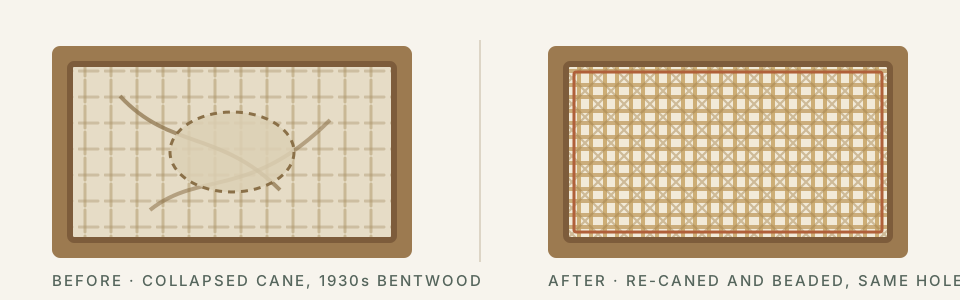
Everything is bought by the bundle and cut to the chair. We do not keep synthetic cane — it does not age with the wood, and it is obvious across a room.
| Material | Width / grade | Typical chair | Lead time |
|---|---|---|---|
| Strand cane, fine | 2.0 mm | Bentwood, small side chairs | In stock |
| Strand cane, medium | 2.5 mm | Dining chairs, most repairs | In stock |
| Strand cane, common | 3.0 mm | Armchairs, wide seats | In stock |
| Danish papercord, unlaced | 3.0 mm | Fifties dining chairs | In stock |
| Natural rush, twisted | Hand-twisted | Ladder-back, country chairs | 4–6 days |
| Seagrass, 3-ply | 3.5 mm | Stools, kitchen chairs | In stock |
| Sheet cane webbing | Close & open weave | Grooved frames only | In stock |
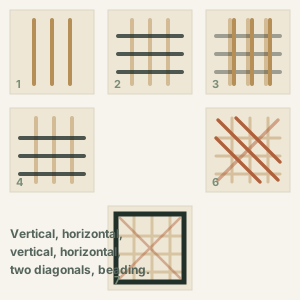
Why seven passes. A six-way seat is built vertical, horizontal, vertical again, then horizontal again, then two diagonals, then the beading. Skip a pass and the pattern still looks right for about a year.
Per seat, materials included, VAT included. A quote is fixed once you have approved it — frame work is the only thing that can be added, and only with your word first.
| Job | Seat up to 40 × 40 cm | Dining size | Armchair / bench |
|---|---|---|---|
| Hand caning, six-way | 2 450 DKK | 2 900 DKK | from 3 800 DKK |
| Danish papercord, envelope | 1 250 DKK | 1 450 DKK | from 2 100 DKK |
| Rush, hand-twisted | 1 600 DKK | 1 950 DKK | from 2 600 DKK |
| Seagrass | 1 150 DKK | 1 350 DKK | from 1 900 DKK |
| Sheet cane and spline | 890 DKK | 1 050 DKK | from 1 500 DKK |
Short notes on what has been in the workshop. Written when there is a spare half hour, so the gaps are honest.
18 August
A set came in where two seats had been re-done at some point in laced cord instead of unlaced. It holds fine, but it sits higher and catches the light differently — from the end of the table you could pick out which two. Both re-woven to match the other four.
4 August
A bentwood chair arrived with every cane hole plugged with filler and a sheet-cane panel glued over the top. Two evenings clearing 78 holes with a drill and a pick before any weaving could start. Worth it — the frame itself was sound.
21 July
Rush needs damping before it is twisted, and in this heat it dried faster than it could be worked. We moved rush jobs to the early mornings for three weeks and told everyone the truth about the delay.
On cane and papercord, yes — the same width and pattern will settle to the same colour within a season or two. New rush stays lighter for longer; on a set we usually suggest doing all the seats so they age together.
No, it is a different job. A grooved frame takes pre-woven sheet cane and a spline, which is faster and cheaper. Hand caning needs drilled holes, and we will not drill a frame that was never built for it.
Regularly. Chairs come from across Jutland and Funen by carrier, and we collect within about 40 km ourselves. Wrap the legs, not the seat, and send us the photographs first.
A hand-caned seat in a normal household lasts fifteen to twenty-five years. Papercord tends to go first at the front rail. We guarantee our own weave for five years against failure that is not accidental damage.
Yes, and about a third of the bench is trade work. Trade terms and batch pricing on request — talk to us before you commit to a delivery date for your own customer.
The workshop is on Jægergårdsgade, at the back of the courtyard. There is no showroom — it is a bench, a rack of chairs and a lot of cane — but you are welcome to watch a seat being worked.